iTrustCapital Wallet: A New 1200-Word Educational Breakdown
The iTrustCapital wallet is part of a platform that enables adults to manage digital assets within U.S. retirement accounts. Although the real service requires age verification and legal documentation, learning how a system like this operates is valuable for understanding custodial wallets, digital finance, and secure asset management. This guide explains the wallet from a purely educational point of view, focusing on how such systems function, why they exist, and what makes them different from everyday crypto wallets people hear about online.
1. Introduction to the iTrustCapital Wallet Concept
The iTrustCapital wallet isn’t a personal self-custody tool where individuals store and manage private keys. Instead, it’s an institutional storage system built to meet strict rules for retirement investing. In the United States, retirement accounts such as IRAs are heavily regulated. That means any wallet holding digital assets for retirement must meet formal standards for safety, oversight, and record-keeping.
The wallet is designed to:
Hold digital assets under regulated custodianship
Support compliant buying and selling inside a retirement account
Keep assets secure for years or decades
Offer transparency and traceability for every transaction
This makes it a specialized environment different from typical crypto apps.
2. Why a Retirement Wallet Works Differently
Retirement investing is fundamentally different from everyday crypto trading. The iTrustCapital wallet reflects these differences in its structure.
Long-Term Focus
IRAs are meant to grow over extended periods.
This means the wallet must prioritize:
Stability
Protection
Auditable records
Institutional custody
Legal Requirements
Regulations require assets to be stored with a qualified custodian.
This prevents individuals from personally controlling the wallet’s private keys.
Restricted Transfers
Retirement rules control how assets move in and out.
The system must therefore enforce:
Contribution limits
Qualified distributions
Prohibited transaction rules
Compliance reporting
These responsibilities shape the wallet’s architecture.
3. Institutional Custody and Collaborative Infrastructure
A major difference between iTrustCapital’s wallet and standard crypto wallets is the involvement of multiple organizations working together to keep the system secure and compliant.
Custodian
A licensed financial institution safeguards the assets.
The custodian ensures:
Proper accounting
Regulated storage
Separation of user holdings from company funds
Security Partners
Specialized providers offer:
Cold storage
Key management systems
Multisig authorization
Technology Providers
iTrustCapital’s platform displays balances, manages trades, and connects users to their held assets.
All parts must work together to deliver a compliant retirement wallet.
4. How Digital Assets Are Stored
Understanding storage methods helps explain the wallet’s security strength.
Cold Storage Systems
Most digital assets are kept offline, which protects them from online attacks.
Cold storage uses:
Hardware security modules
Air-gapped systems
Environmental controls
Multisignature Protocols
Instead of a single private key, multiple parties must approve asset movement.
This reduces the risk of:
Internal misuse
External hacking
Operator error
Geographic Redundancy
Backup systems exist in multiple secure locations.
If one facility experiences issues, assets remain protected.
These layers contribute to the wallet’s resilience.
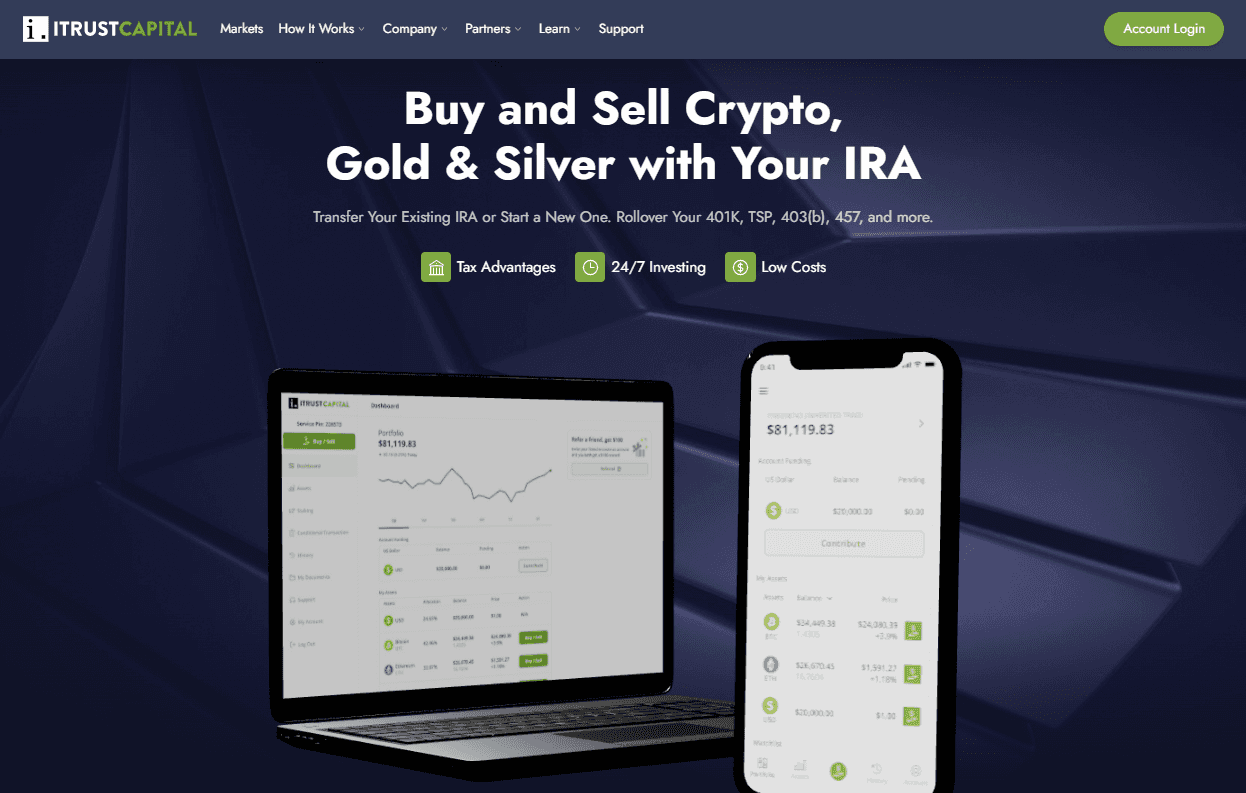
5. The Wallet Dashboard for Users
Although minors cannot use the platform, studying the dashboard layout is helpful for understanding how financial apps organize information.
The interface usually includes:
1. Portfolio Overview
A summary showing:
Total account value
Growth or decline trends
Current market prices
2. Asset Breakdown
This section categorizes funds across various digital assets or metals.
3. Activity Log
Every transaction, trade, deposit, and movement is documented.
This ensures transparent auditing.
4. Security Controls
Adults can access tools like:
Multi-factor authentication
Device monitoring
Login history
5. Settings and Reporting
Since it’s a retirement platform, users may generate forms and statements for tax purposes.
This dashboard provides clarity, organization, and accessibility.
6. How a Trade Interacts with the Wallet
The workflow of a trade inside a retirement wallet is different from everyday crypto apps.
Step 1: Order Placement
The user selects:
The asset
The quantity
The type of transaction
Step 2: Trade Routing
The platform routes the order to a liquidity partner.
Real-time market conditions guide pricing.
Step 3: Execution
Once filled, the new asset allocation appears in the wallet system.
Step 4: Custodial Settlement
The custodian records the new asset and updates the user’s retirement account records.
Step 5: Balance Update
The dashboard displays up-to-date portfolio values.
This process ensures accuracy, compliance, and smooth operation.
7. How Security Protects the Wallet
Because retirement savings represent long-term wealth, the wallet incorporates several defensive measures.
A. Account Security
Even before reaching the wallet, systems protect user access through:
Encrypted sessions
Multi-factor authentication
IP address monitoring
Login notifications
B. Infrastructure Security
Behind the scenes, the custodians and security partners handle:
Key management
Network monitoring
Threat detection
Regular audits
C. Regulatory Protection
Compliance with U.S. retirement laws means:
Oversight from financial regulators
Mandatory reporting
Annual audits
Together, these defenses create a secure environment.
8. Records and Documentation
One of the most important components of a retirement wallet is thorough documentation.
Transaction Records
Each buy or sell event includes:
Timestamp
Price
Amount
Asset type
This helps maintain precise histories.
Tax and Reporting Data
Retirement accounts require specific reporting.
The wallet architecture must track:
Contributions
Distributions
Required minimum distribution calculations
Asset valuations
Audit Trails
Internal and external audits ensure transparency and compliance.
Record-keeping is a core element of retirement investing.
9. Differences from Personal Crypto Wallets
To understand iTrustCapital’s wallet better, compare it with typical user-controlled wallets.
1. Private Keys
iTrustCapital wallet: Keys managed by custodians
Personal wallet: User controls the private key
2. Usage Purpose
iTrustCapital: Retirement investment
Personal wallet: Everyday transfers, payments, trading
3. Compliance
iTrustCapital: Must follow regulatory rules
Personal wallet: Generally not regulated
4. Transfer Flexibility
iTrustCapital: Transfers limited by IRS rules
Personal wallet: User can send assets freely
5. Security Level
Institutional retirement wallets usually use advanced protection methods not available in normal consumer apps.
10. Educational Benefits of Understanding This Wallet
Even without participating in adult financial platforms, there is a lot a teenager can learn by studying systems like the iTrustCapital wallet.
A. Cybersecurity Awareness
You learn how:
Cold storage works
Authentication systems keep accounts safe
Encryption protects data
B. Financial Technology Insight
Retirement platforms show how technology and finance merge.
C. User Experience Design
The dashboards demonstrate how complex information can be made easy to understand.
D. Compliance and Regulation
Studying retirement platforms offers insight into how laws shape financial technology.
E. Long-Term Asset Management
Even though you can’t use such platforms yet, understanding long-term investment structures helps build financial literacy for the future.
11. Conclusion
The iTrustCapital wallet serves as a sophisticated and regulated environment tailored to long-term asset storage inside retirement accounts. Unlike everyday crypto wallets, it prioritizes institutional security, legal compliance, and reliable record-keeping. While actual use is restricted to adults, examining how the wallet works is a valuable way to learn about digital asset management, custodial systems, cybersecurity, and fintech platform design.