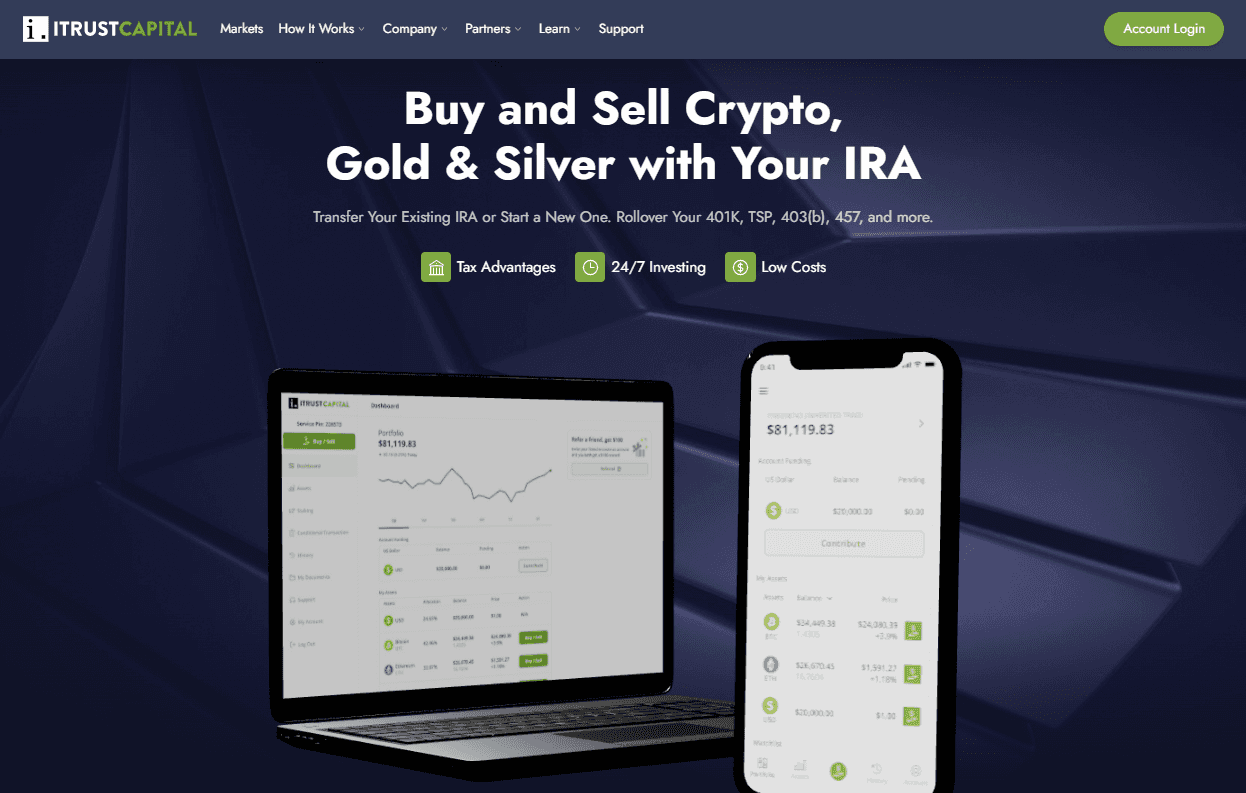
iTrustCapital Wallet: A Complete 1200-Word Educational Overview
iTrustCapital is a U.S.-based digital asset retirement platform known for allowing adults to manage cryptocurrency and precious metals inside tax-advantaged retirement accounts. While real use of the service requires adulthood and government-verified identities, analyzing how an iTrustCapital-style wallet works is valuable from a learning standpoint. It gives insight into digital asset storage, platform architecture, financial security, and how modern investment platforms design systems that keep user holdings safe.
This educational guide explains the iTrustCapital wallet, breaking down how it functions, what its purpose is, and why its design is different from typical consumer wallets. All information is provided for learning only and not for actual participation in financial services.
What Is the iTrustCapital Wallet?
The iTrustCapital wallet isn’t a simple personal crypto wallet like a mobile app or browser extension. Instead, it is an organized, custodial storage system built specifically for retirement accounts. While individual users own the assets, the wallet itself is maintained and secured by partnered trust companies and regulated custodians.
The platform’s wallet architecture focuses on:
Secure storage
Compliance with U.S. retirement regulations
Controlled asset transfers within IRA guidelines
Long-term management rather than day-to-day trading
Because retirement accounts are legally restricted and designed for adults, the wallet operates under strict rules related to taxes, custodianship, and asset protection.
The Purpose of a Custodial Retirement Wallet
Unlike common crypto wallets where individuals hold their own private keys, a retirement wallet is custodial. That means a regulated institution manages safekeeping of the digital assets.
Educationally, a custodial wallet serves several purposes:
a. Regulatory Compliance
Retirement accounts in the U.S. must follow IRS rules.
This includes:
Verified custodians
Regulated storage
Tracking contributions and distributions
Secure reporting for tax seasons
b. Long-Term Security
Retirement funds are meant to be held for many years.
The storage system must therefore:
Protect against hacking
Prevent unauthorized transfers
Ensure quick recovery systems
Manage strict auditing practices
c. Stability in Record-Keeping
Retirement funds involve:
Contribution limits
Historical transaction records
Balance audits
Custodial oversight
The wallet must maintain clear, accurate accounting at all times.
How the iTrustCapital Wallet Functions
Even though teens cannot use real accounts, understanding how these wallets function can build knowledge in areas like fintech, cybersecurity, and platform engineering.
Safe Asset Storage
iTrustCapital partners with institutional custodians that hold assets in:
Cold storage systems
Air-gapped vaults
Multi-signature authorization models
Strict access controls
These institutional-grade systems differ significantly from personal wallets.
Trading and Portfolio Management
The wallet connects with the platform’s trading interface, allowing adults to:
Buy digital assets
Sell them
Allocate retirement funds
Diversify portfolios
All of this happens within the broader IRA framework.
Real-Time Valuation
The wallet displays current asset values based on market prices, giving users a real-time picture of their portfolio.
Transaction Records
Every movement in or out of the wallet is logged, providing:
Transparency
Audit trails
Compliance with reporting laws
Record-keeping is a major requirement for retirement accounts.
Security Architecture of the Wallet
A large part of the iTrustCapital wallet’s design revolves around protecting user assets. Since retirement savings represent long-term funds, security is engineered at a high institutional level.
Cold Storage
Most assets are held offline, eliminating risks from online attackers.
Multi-Signature Controls
Several approvals are required to move funds, ensuring no single individual can transfer assets.
Encrypted Access and Monitoring
Systems track:
IP changes
Login behavior
Unusual activity
Access patterns
Independent Custodianship
Custodial institutions separate user funds from company operations.
This helps ensure:
Asset security
Clear financial boundaries
Legal compliance
Regulatory Oversight
Custodial partners undergo audits, reviews, and security assessments.
What Users See in the iTrustCapital Wallet Dashboard
Although minors can’t use the system, understanding how dashboard layouts are designed teaches helpful UX and fintech principles.
A retirement-focused wallet interface usually shows:
Portfolio Overview
Total holdings
Individual asset values
Growth graph
Historical performance
Asset Allocation
Users can see exactly how much of their retirement fund is in:
Cryptocurrency assets
Precious metals
Stablecoins or cash equivalents
Transaction History
Every buy or sell order is recorded with details such as:
Date
Time
Amount
Price
Fees
Security Settings
Adults can manage things like:
Login devices
Multi-factor authentication
Alerts
Password updates
These tools reduce the risk of unauthorized access.
Differences Between iTrustCapital Wallet and Consumer Crypto Wallets
Understanding how the two differ is useful for learning about digital finance.
Custodial vs. Self-Custodial
iTrustCapital: Managed by regulated custodians
Consumer Wallets: Users hold their own private keys
Purpose
iTrustCapital: Long-term retirement investment
Consumer Wallets: Everyday transfers, payments, and personal storage
Regulations
iTrustCapital: Must follow retirement laws
Consumer Wallets: No formal legal structure
Transfer Restrictions
Retirement wallets have controlled transfer systems to maintain compliance.
Security Level
Institutional-grade storage far exceeds ordinary consumer wallet setups.
Transaction Process Inside the Wallet
Understanding transaction flows helps build knowledge of how financial systems handle digital assets.
a. Initiating a Trade
Users choose an asset and amount.
The wallet system checks:
Available balance
Custodial permissions
Price movements
Order type
b. Execution
The platform completes the trade using liquidity providers.
c. Settlement
Assets are moved into custodial storage and recorded in the user’s retirement account.
d. Confirmation
Users see updated wallet balances in real time.
This flow balances speed with safety and regulatory requirements.
Security Measures Tied to Login Systems
Wallet security heavily depends on login protection. Though minors cannot create accounts, learning these concepts is valuable.
Multi-Factor Authentication
Adds a second verification step.
Login Alerts
Users are notified of sign-in attempts.
Device Monitoring
New devices trigger security checks.
Encrypted Sessions
All activity occurs within encrypted browser sessions.
Automatic Logout
Inactive sessions close to reduce risks.
Educational Lessons from the iTrustCapital Wallet Model
Even if you aren’t old enough to use digital asset platforms, there are meaningful lessons:
Understand Custodial Security
Not all wallets give personal control over private keys.
Learn About Long-Term Investment Structures
Retirement accounts are different from trading apps.
Recognize Regulatory Impacts
A financial platform must follow legal frameworks that influence design and usage.
Study Cybersecurity Principles
Secure login systems, cold storage, and encryption are key concepts in digital safety.
Appreciate User Interface Simplicity
Financial dashboards are designed for clarity, accuracy, and accessibility.
Understand Risk Management
Long-term asset storage requires multi-layer protection and strict oversight.
Conclusion
The iTrustCapital wallet represents a specialized, secure, and highly regulated way for adults to manage digital assets inside retirement accounts. While minors cannot participate in such services, exploring the wallet’s architecture, purpose, and security systems offers valuable insight into modern fintech operations.
Learning how these platforms work helps build foundational knowledge in cybersecurity, blockchain systems, digital finance, and user interface design—skills that are increasingly important in today’s technology-driven world.